as•pire:
To direct one’s hopes or ambitions toward achieving something.
Our Philosophy
At least half of women have this problem.
How to Treat Varicose Veins
When considering varicose vein treatment, a thorough physical exam by a qualified healthcare provider helps determine the best approach for your needs. Depending on the size and location of the affected vein, options may vary from laser therapy to sclerotherapy injections or radiofrequency ablation. Most patients benefit from a minimally invasive treatment that allows for a quick recovery and long-term results.
Wearing compression stockings is often recommended before and after treatment to improve blood flow and support the healing process. These stockings help reduce swelling and discomfort caused by blood pooling in weakened veins. In some cases, underlying issues like deep vein thrombosis or superficial vein thrombosis may need to be ruled out during your initial appointment.
Lasers to Treat Larger Varicose Veins
When considering varicose vein treatment, a thorough physical exam by a qualified healthcare provider helps determine the best approach for your needs. Depending on the size and location of the affected vein, options may vary from laser therapy to sclerotherapy injections or radiofrequency ablation. Most patients benefit from a minimally invasive treatment that allows for a quick recovery and long-term results.
Wearing compression stockings is often recommended before and after treatment to improve blood flow and support the healing process. These stockings help reduce swelling and discomfort caused by blood pooling in weakened veins. In some cases, underlying issues like deep vein thrombosis or superficial vein thrombosis may need to be ruled out during your initial appointment.
Sclerotherapy
Sclerotherapy involves injecting a chemical solution directly into the small veins or large veins, causing the injected veins to collapse and be reabsorbed by the body. A fine needle is used to deliver the agent into the small blood vessels, and multiple treatments may be needed depending on the number and severity of the treated blood vessels. This technique is often recommended to treat spider veins, tiny varicose veins, and even some calf muscles when visible veins become bothersome or painful. Sclerotherapy can also help alleviate related conditions like venous eczema, which occurs due to long-term poor circulation.
Before Your Sclerotherapy or Laser Treatment Procedure
You may be asked to complete some lab testing or a medical evaluation before your spider vein therapy. You will be required to stop smoking and avoid aspirin and anti-inflammatory drugs, and you may need to take medication or adjust your current medication.
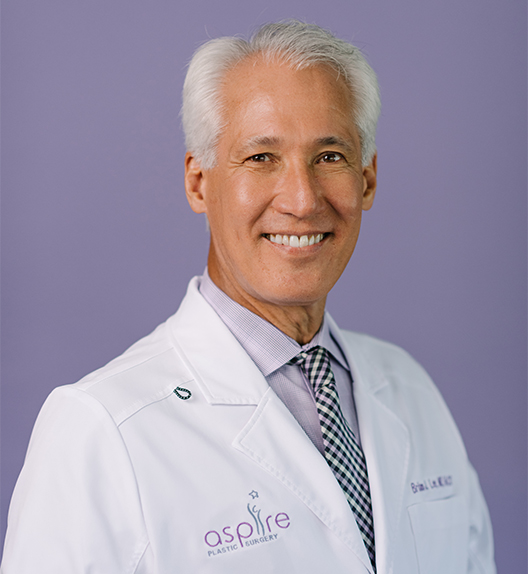
Dr. Brian Lee
MD, FACS
Double Board-Certified Plastic Surgeon
Dr. Brian Lee has been in practice for over 2 decades, serving the Fort Wayne community for all their aesthetic and cosmetic needs. He is proud to work alongside his talented team and looks forward to seeing new and returning patients in his office.
Visit Team Page
Your Minimally Invasive Procedure
Your spider veins most likely will be treated with sclerotherapy, in which a solution is injected into the veins to irritate them, causing them to collapse and become less visible. The injections may sting briefly, but the discomfort is temporary, so no anesthesia is needed. You can expect to receive an injection for approximately every inch of the spider vein treated. Or the Advanced Practitioner may decide to use a laser to treat your spider veins instead, particularly if they are on or near your face. In this method, a beam of light destroys the vein through the skin. Both are very effective treatments. You will typically need to undergo two sessions to successfully eliminate your spider veins.
After Your Procedure
You will be encouraged to walk in the first week after your treatment, though you should avoid squatting, heavy lifting, and running. You also should avoid sitting or standing in one place for more than an hour. You can return to work immediately as long as these activities are not a part of your day. The treated sites will appear bruised during this time, but the bruising and the veins will fade over the course of a month. You may need to wear support stockings for three to six weeks, and you should avoid direct sunlight on the treated areas during this time. After a month, you should be able to resume most activities; you can then undergo a second spider vein treatment.
Understanding the Risks
Spider vein therapy is a relatively safe procedure. Risks include:
- Unattractive scar tissue
- Bleeding (hematoma)
- Infection
- Poor healing of injection sites
- Change in skin sensation
- Damage to deeper structures, such as nerves, blood vessels, and muscles, may be temporary or permanent
- Allergies to tape, suture materials, glues, blood products, topical preparations, or injected agents
- Skin contour irregularities
- Skin discoloration and swelling
- Skin sensitivity
- Ulceration
- Pain, which may persist
- Possibility of revisional surgery
- Need for further injection therapy
Our Advanced Practitioner will explain these risks at your consultation. Talk to him if you have any concerns about the procedure.
Results of Your Procedure
Not all of your spider veins will respond to the first treatment. And you can expect new spider veins to pop up over time. Two or more initial treatments will help you achieve your goals for clear skin, and occasional follow-up treatments will help maintain your improvement. Spider vein treatment is a safe, time-proven procedure. With relatively little discomfort and downtime, you can generally expect to enjoy excellent results—and put your best foot forward. The key to a truly successful result is maintaining an open line of communication with the Advanced Practitioner. He and his team are eager to respond to your questions and can help provide skin care to maintain and enhance your results—they are your partners in achieving the results that you seek.
Sources: The American Society of Plastic Surgeons; The American Society for Aesthetic Plastic Surgery
Results of Your Procedure
Not all of your spider veins will respond to the first treatment. And you can expect new spider veins to pop up over time. Two or more initial treatments will help you achieve your goals for clear skin, and occasional follow-up treatments will help maintain your improvement. Spider vein treatment is a safe, time-proven procedure. With relatively little discomfort and downtime, you can generally expect to enjoy excellent results—and put your best foot forward. The key to a truly successful result is maintaining an open line of communication with the Advanced Practitioner. He and his team are eager to respond to your questions and can help provide skin care to maintain and enhance your results—they are your partners in achieving the results that you seek.
Sources: The American Society of Plastic Surgeons; The American Society for Aesthetic Plastic Surgery
Why Choose Aspire Plastic Surgery For Spider Vein Treatment
Patients choose Aspire Plastic Surgery for spider vein treatment because our experienced healthcare professionals provide safe, effective, and minimally invasive treatment options tailored to each patient’s needs. Our Advanced Practitioners perform a thorough medical history review and physical exam to determine the right approach. Aspire emphasizes safety at every step, evaluating issues such as deep vein thrombosis, superficial vein thrombosis, or poor blood circulation, and monitoring the treated area to minimize risks like scar tissue, allergic reactions, or blood clots.
With expert technique, supportive post-treatment guidance, our team delivers excellent outcomes that help reduce swelling, fade treated veins, and restore confidence. Aspire’s commitment to precision, comfort, and long-term results makes it a trusted provider for patients seeking effective vein treatment and personalized care.
Request a Consultation
If you are considering treating your spider veins, you are encouraged to visit our Fort Wayne facility. Our Advanced Practitioner will first meet with you to assess your condition. Small spider veins are largely hereditary, though several other factors may contribute to their development, such as:
- Pregnancy
- Hormonal shifts
- Weight gain
- Occupations or activities that require prolonged sitting or standing
Our Advanced Practitioner will ask about your goals for eliminating your spider veins. Be prepared to discuss your medical history, including any conditions or previous procedures, drug allergies, and current medications. Let the Advanced Practitioner know if you’ve had any pain, surgeries, or injuries in the areas to be treated.
The Advanced Practitioner may also examine you to determine if you’re suffering from any deep vein problems or varicose veins, which require a different course of treatment. Our Advanced Practitioner has treated patients in the Angola, Warsaw, and Huntington areas with their spider veins; you can be assured you are in experienced hands.